
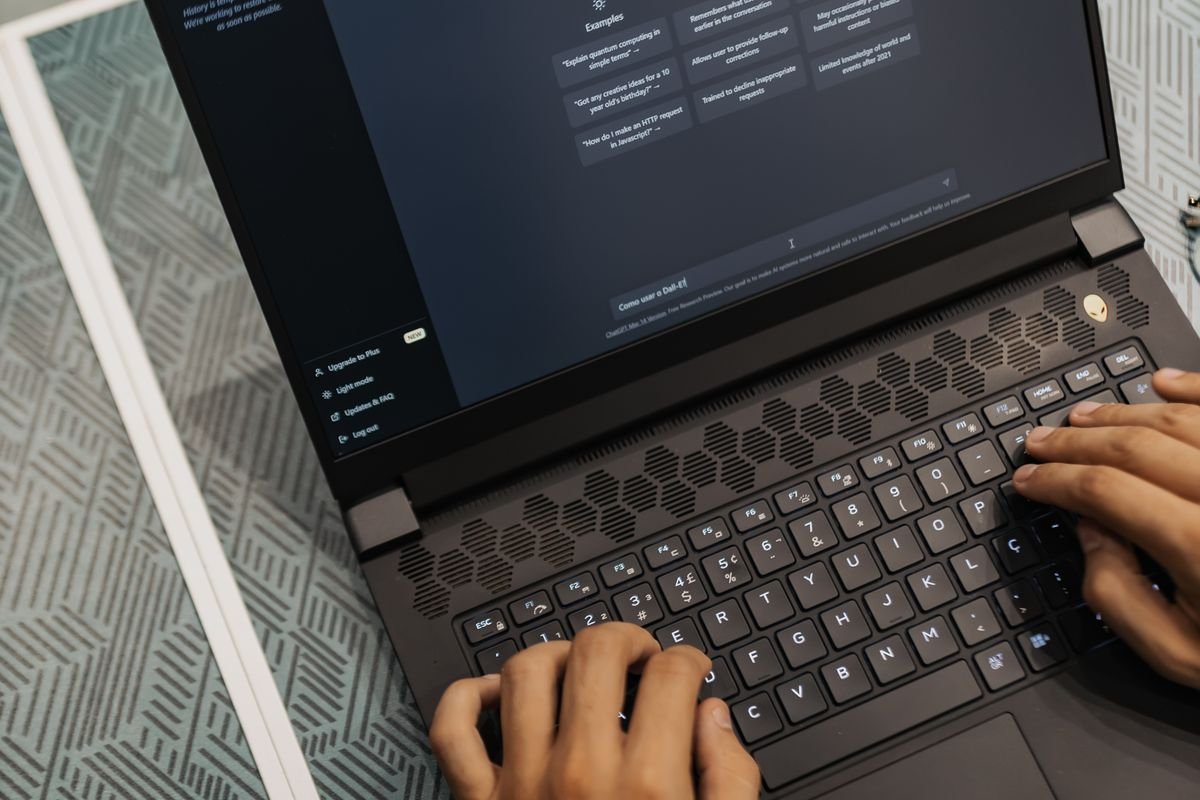
You cannot pay to appear in a ChatGPT answer, and nobody can guarantee you a citation. But you can do three things that decide whether your site is even in the running: let OpenAI’s search crawler in, make sure Bing can find your pages, and write pages that read like quotable answers. On WordPress, the whole check takes about ten minutes. This guide walks through it — using StackPilotBiz’s own site as the worked example.
Why it matters
ChatGPT had 1.2 billion weekly users at OpenAI’s DevDay on 29 September 2026, up from 900 million in February. When those people ask a question, the answer increasingly arrives as a paragraph, not a list of links — and the links that do appear are few.
Pew Research Center tracked the real browsing of 900 US adults in March 2025 (68,879 Google searches). When an AI summary appeared, people clicked a traditional search result on 8% of visits, against 15% when no summary appeared. They clicked a link inside the summary itself on just 1% of visits. In other words, the click is getting rarer — and the citation inside the answer is becoming the click.
That is the shift behind this article. The old question was “how do I rank on Google?” The new question, for a small business, is “when someone asks ChatGPT about my kind of work, does it quote me — or my competitor?”
The honest part first
No tool, agency or checklist can promise you a citation. OpenAI and Google both say placement is not guaranteed, and the research is blunt about why authority still dominates.
One vendor study of 200 sites (Outrank, via Zynvoss, October 2026) found domains with a Domain Rating of 30 or more earned a median of 100 AI citations, against 3.5 for sites under DR 10 — a 29-fold gap. Google impressions and AI citations correlated at 0.80. Treat that as one study, not a law, but the direction is consistent with everything else: sites that already rank tend to get cited.
StackPilotBiz is a very low-authority site — 358 visitors in the last 28 days, 14 keywords tracked, average position around 74. So this article does not promise citations. Its honest aim is narrower: make your site eligible and quotable, so that when the authority comes, the citations can follow. That is a real, achievable goal for a small business site, and it is the only honest way to sell this work.
How ChatGPT actually picks what to cite
Getting retrieved is not the same as getting cited. Two large studies measured the gap:
- AirOps (March 2026) analysed 548,534 pages ChatGPT retrieved across 15,000 prompts. Only 15% of them were cited in the final answer. The other 85% were read and dropped. More than half of the pages that were cited (55.8%) ranked in Google’s top 20.
- Ahrefs (April 2026) analysed 1.4 million ChatGPT prompts and found about half of retrieved URLs (49.98%) ended up cited. The difference from AirOps is mostly Reddit: Reddit supplied two-thirds of the URLs ChatGPT retrieved and declined to cite. Pages pulled through ordinary web search were cited 88.46% of the time — which is why ranking in search still matters so much.
Once a page is retrieved, small things decide whether it survives the cut. In the Ahrefs data, cited pages had titles that matched the question more closely (a similarity score of 0.602, against 0.484 for pages passed over), and pages with natural-language web addresses — /how-to-automate-invoice-follow-ups rather than /p=984 — were cited 89.78% of the time, against 81.11% for opaque ones. Cited pages also tended to be fresher than the pages Google returns for the same query: on average 458 days newer.
The practical reading: ChatGPT quotes pages it can find, that look like they answer the exact question, and that are written to be quoted. Everything below follows from that.
The 10-minute check
Do this before you rewrite a word. It has three steps, all inside WordPress or free tools.
Step 1 — Is your robots.txt letting the right crawler in? (3 minutes)
Your robots.txt is a small text file at the root of your site — yoursite.com/robots.txt — that tells crawlers which pages they may fetch. Open it in your browser and look for the names below. If you use Rank Math, you can also view and edit it from the WordPress dashboard under Rank Math → General Settings → Edit robots.txt.
The trap is that OpenAI runs two different crawlers, and blocking the wrong one is the most common self-inflicted wound in AI search:
| Crawler | What it does | Block it and… |
|---|---|---|
| OAI-SearchBot | Finds pages for ChatGPT search answers | Your pages will not be shown in ChatGPT search answers |
| GPTBot | Collects content that may train OpenAI’s models | Nothing changes in search — this is a training decision, not a visibility one |
| ChatGPT-User | Fetches a page when a person asks ChatGPT to read it | OpenAI says robots.txt rules may not apply to it |
| PerplexityBot | Finds pages for Perplexity answers | Your pages will not appear in Perplexity results |
OpenAI’s own documentation is explicit: the two settings are independent. Blocking GPTBot does not remove you from ChatGPT search. Blocking OAI-SearchBot does. Many guides written in 2023–24 only mention GPTBot, because OAI-SearchBot did not exist yet — if you followed one of those, check your file now.
A robots.txt that keeps you visible while opting out of training looks like this:
# AI search: allow, so AI tools can find and cite your pages
User-agent: OAI-SearchBot
Allow: /

User-agent: PerplexityBot
Allow: /

# AI training: your choice — Disallow opts your content out of training
User-agent: GPTBot
Disallow: /
If your file does not mention these crawlers at all, they are allowed by default — no action needed. OpenAI says it takes about 24 hours for its systems to adjust after a robots.txt change.
One warning: robots.txt is only one layer. A CDN, firewall or security plugin can still return a “blocked” response to an AI crawler even when robots.txt allows it. If you run one — StackPilotBiz, for example, runs the Hostinger CDN and LiteSpeed Cache — check your server or security-plugin logs for OAI-SearchBot requests before assuming you are fully crawlable. We have not verified that layer on this site.
Step 2 — Is Bing finding your pages? (4 minutes)
ChatGPT search draws on Bing among its search providers, and a small 2025 study by Seer Interactive found 87% of ChatGPT citations matched Bing’s top organic results, against 56% for Google’s (a 100-query sample — directional, not definitive, but consistent with the Bing connection). Either way, being indexed by Bing is a precondition, not an optional extra.
- Open Bing Webmaster Tools (free) and check that your key pages are indexed. If you have never submitted the site, add it and submit your sitemap.
- In WordPress, the IndexNow plugin pings Bing automatically whenever you publish or update a page. If it is installed, confirm it is active and connected; if it is not, install it — it takes two minutes and removes the waiting.
- Search Bing for site:yoursite.com and confirm your important pages appear.
Step 3 — Does your best page answer one question, in the first paragraph? (3 minutes)
Open the page you most want cited. Ask: if someone pasted the question this page answers into ChatGPT, would this page read like the answer? That means a heading that matches the question in plain words, a first paragraph that answers it directly, and the evidence — a figure, a quote, a named source — in the same section. If the answer is buried three screens down, move it up. The next section explains why this matters more than any plugin.
Worked example: StackPilotBiz’s own robots.txt
We ran this check on this site on 13 November 2026. The file reads:
User-agent: *
Disallow: /wp-admin/
Allow: /wp-admin/admin-ajax.php
Sitemap: https://stackpilotbiz.site/sitemap_index.xml
No AI search crawler is named, so none is blocked: OAI-SearchBot, PerplexityBot and Googlebot are all allowed by default. GPTBot is also allowed, which is a training opt-out decision the site has not yet made — it is separate from search visibility, and the article does not assume an answer.
Two caveats, stated plainly because a BBC-standard article does not claim what it has not checked: the Hostinger CDN / LiteSpeed layer has not been tested against OAI-SearchBot, so full crawlability is not yet proven; and Bing indexing of key pages has not been verified in Bing Webmaster Tools. Both are on the pre-publish checklist below.
How to write pages ChatGPT quotes
The most useful evidence here comes from the first peer-reviewed study of the field. In “GEO: Generative Engine Optimization” (Aggarwal and colleagues, presented at KDD 2024), researchers tested nine ways of rewriting web content across 10,000 queries and measured how much of the generated answer each version received. Three tactics worked; one backfired:
- Add quotations from named experts: +41% visibility. The strongest single tactic in the study.
- Add statistics with sources: +31%.
- Cite credible sources: +28%.
- Keyword stuffing: −8%. Worse than doing nothing at all.
The gains were largest for pages that started lower in the search results: for a source ranked fifth, citing sources raised visibility by 115%. The authors validated the effect on live Perplexity too, where quotations again performed best. Two cautions travel with these numbers: the main experiments ran on the authors’ own test engine, not on ChatGPT itself, and percentages from a 2023–24 study are directional — the engines change constantly. But the pattern — quotable, evidenced, sourced — is confirmed by every later citation study.
Translated into habits for a small-business WordPress site:
- Answer first, in every section. Put the direct answer in the first sentence after each heading, then the explanation. AI engines lift passages; a passage that starts with the answer gets lifted.
- Use figures, and name where they came from. “Most small businesses” is not quotable. “Pew found 8% against 15%” is — because the engine can check it and the reader can too.
- Quote a named person or a named document. A sentence attributed to a real source is the single highest-performing format in the Princeton study.
- Title the page like the question. Ahrefs found cited titles matched the prompt far more closely than uncited ones. “How to get your WordPress site cited by ChatGPT” will be quoted for that question; “AI Search Visibility: A Guide” will not.
- Keep the web address in plain words. A slug that reads like the question was cited 89.78% of the time in the Ahrefs data, against 81.11% for an opaque one. WordPress lets you set this per post — use it.
- Keep pages fresh. Cited pages averaged 458 days newer than the pages Google returned for the same queries. Updating a good page with a new date and a new figure beats publishing a thin new one.
- Prefer server-rendered content. WordPress with a classic theme (StackPilotBiz runs GeneratePress) serves full HTML to a crawler. Content that only appears after JavaScript runs is harder for every crawler, AI or otherwise, to read.
What will not work
- Paying for placement. There is no paid route into ChatGPT answers, and no tool sells one. Anyone offering guaranteed citations is selling something that does not exist.
- Keyword stuffing. The Princeton study measured it as worse than doing nothing. Repeating your target phrase does not make a page more quotable; it makes it less so.
- llms.txt. A proposed file that summarises a site for AI models. No major AI assistant says it reads it, and Google has said it does not use it. Do not spend an afternoon on it before doing the ten-minute check above.
- Hiding behind a “block all AI” setting. Some security and SEO plugins now offer one-click blocking of all AI crawlers. It is a legitimate choice if you object to AI use of your content — but understand it also removes you from AI answers. Make it a decision, not an accident.
How to measure whether it is working
AI visibility is not in Google Search Console yet, so measure it yourself, once a month, with ten questions your customers actually ask. For each one, ask ChatGPT and Perplexity in a fresh chat, and record three things: was your site cited, was it mentioned without a link, and who was cited instead. Also check the referral traffic in Google Analytics from chatgpt.com and perplexity.ai — a citation that nobody clicks still builds familiarity, but a clicked one is the one that pays.
Do this monthly, not daily: citations move slowly, and a new or low-authority site should expect months, not days, before the first one appears. The honest metric for the first quarter is not “how many citations” but “is every new page eligible and quotable?” If the answer is yes, the work is done; the citations are a lagging indicator.
Why it matters
Search is splitting in two. Google still sends the clicks, but the answer increasingly arrives before the click — and Pew’s numbers show how few clicks survive that. For a small business, the realistic response is not to outspend anyone. It is to be findable by the crawlers, quotable in the answers, and honest about the timeline. Ten minutes of checks, then better pages. That is the whole strategy.
FAQ
How do I get my business cited by ChatGPT?
Make sure OpenAI’s search crawler (OAI-SearchBot) can reach your site, get your pages indexed by Bing, and write pages that answer one question directly, with a figure or a quote and a named source. There is no application form and no paid route — citation follows from being retrievable and quotable.
Does blocking GPTBot stop ChatGPT citing me?
No. GPTBot collects content that may be used to train OpenAI’s models; OAI-SearchBot is the crawler that finds pages for ChatGPT search answers. OpenAI says the two settings are independent, so you can block GPTBot and still appear in ChatGPT answers, as long as OAI-SearchBot is allowed.
How do I check if robots.txt is blocking ChatGPT?
Open yoursite.com/robots.txt in your browser and look for OAI-SearchBot. If it says Disallow: / under that name, your site will not appear in ChatGPT search answers. If the file does not mention it, it is allowed by default. In WordPress with Rank Math, you can view and edit the file under Rank Math → General Settings → Edit robots.txt.
Can I pay to appear in ChatGPT answers?
No. OpenAI offers no paid placement in ChatGPT answers, and Google says the same about AI Overviews. Any service selling guaranteed citations is selling something that does not exist.
How do ChatGPT, Perplexity and Google choose which sources to cite?
All three retrieve pages from web search, then select a small number to quote. Studies agree on the pattern: pages that rank in search, match the question in their title, use plain-language web addresses, and carry quotations, statistics and named sources are cited most. AirOps found only 15% of pages ChatGPT retrieved were cited; Ahrefs found about half, with pages from ordinary web search cited 88.46% of the time.
Does ChatGPT cite YouTube videos?
Rarely as a source link. Audits of ChatGPT citations find the overwhelming majority point to written pages. Video can support your expertise, but if you want the citation, publish the same information as a written page.
What is GEO, or generative engine optimization?
The practice of making web content easy for AI assistants to retrieve, quote and cite — the counterpart of SEO for search engines. The term comes from a 2024 Princeton-led study, “GEO: Generative Engine Optimization”, which tested which rewrites made a page more visible in AI-generated answers.
Do I need llms.txt?
Probably not. It is a proposed file that summarises a site for AI models, but no major AI assistant says it reads it, and Google says it does not use it. Do the robots.txt and Bing checks first; llms.txt is, at best, a later experiment.
How do I measure whether AI assistants mention my brand?
Ask ChatGPT and Perplexity your customers’ ten most common questions in fresh chats once a month, and record whether your site is cited, mentioned, or absent — and who is cited instead. Also watch referral traffic from chatgpt.com and perplexity.ai in Google Analytics, and check Bing Webmaster Tools for indexing.
Is GEO different from SEO?
It builds on it. The same foundations — crawlability, indexing, ranking, clear writing — decide whether AI engines ever see your page. GEO adds the quotability layer: answer-first sections, statistics, quotations and named sources, written so an engine can lift a passage intact. A site that ranks in search is, by the studies, far more likely to be cited; a site that does not rank is rarely cited at all.
Sources
- Aggarwal, P. et al., “GEO: Generative Engine Optimization”, Proceedings of KDD 2024 (arXiv:2311.09735). Quotations +41%, statistics +31%, citing sources +28%, keyword stuffing −8%; 5th-ranked source +115% from citing sources.
- Pew Research Center, Chapekis & Lieb, “Google Users Are Less Likely to Click on Links When an AI Summary Appears in the Results”, 22 July 2025 (browsing data from 900 US adults, March 2025; 68,879 searches). 8% vs 15% traditional-result clicks; 1% clicked a link inside the summary.
- AirOps, “The Influence of Retrieval, Fan-out, and Google SERPs on ChatGPT Citations”, March 2026 (via Search Engine Land). 548,534 pages retrieved across 15,000 prompts; 15% cited; 55.8% of cited pages in Google’s top 20.
- Ahrefs, “Why ChatGPT Cites One Page Over Another” (study of 1.4 million ChatGPT prompts), April 2026. 49.98% of retrieved URLs cited; search channel 88.46%; natural-language slugs 89.78% vs 81.11%; title similarity 0.602 vs 0.484; median cited page ~500 days old; cited pages 458 days newer than Google organic results.
- OpenAI, “Overview of OpenAI Crawlers” (via its published documentation). OAI-SearchBot vs GPTBot vs ChatGPT-User; ~24 hours for robots.txt changes to take effect.
- OpenAI via TechCrunch, 27 February 2026: 900 million weekly ChatGPT users. OpenAI DevDay, 29 September 2026: 1.2 billion weekly users.
- Outrank study of 200 sites (via Zynvoss, October 2026): DR 30+ median 100 AI citations vs 3.5 under DR 10; Google impressions ↔ AI citations correlation 0.80. One vendor study — treat as directional.
- Seer Interactive (early 2025, 100-query sample): 87% of ChatGPT citations matched Bing’s top organic results vs 56% for Google. Directional.
- StackPilotBiz robots.txt, checked live 13 November 2026: https://stackpilotbiz.site/robots.txt
Was this article helpful?